
What is an IP Address?
What is an IP Address?
An IP address is a fascinating product of modern computer technology designed to allow computers (or other digital devices) to communicate with one another over the Internet. It enables the location of billions of digital devices connected to the Internet to be precisely identified and distinguished from one another. Just as someone needs your mailing address to send you a letter, a remote computer needs your IP address to communicate with your machine.
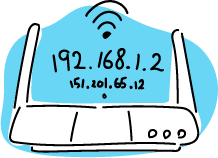
"IP" stands for Internet Protocol, so an IP address is an Internet Protocol address. What does that mean? The Internet Protocol is a set of rules that governs Internet operations and facilitates various actions across the World Wide Web. Therefore, an Internet Protocol address is part of a systematically connected grid that governs online communication by identifying both initiating devices and various Internet destinations, thereby enabling two-way communication.
An IP address consists of four numbers, each containing one to three digits, separated by a dot (.). Each of these four numbers ranges from 0 to 255. Here is an example of what an IP address might look like: 46.165.37.208. This harmless-looking group of four numbers is the key that empowers you and me to send and retrieve data over our Internet connections, ensuring that our messages—as well as our requests for data and the data we request—reach their exact Internet destinations. Without this numerical protocol, sending and receiving data over the World Wide Web would be impossible.
IP addresses can be either static or dynamic:
-
Static IP addresses never change. They serve as a permanent Internet address, providing a simple and reliable way for remote computers to communicate with you. A static IP address reveals information such as the continent, country, region, and city where the computer is located; the ISP (Internet Service Provider) serving that specific machine; and technical metadata like the precise latitude and longitude of the computer's country and locality. Many websites offer free IP lookup services to their visitors. If you are curious about your own IP address, you can easily find these sites via a quick Google search.
-
Dynamic IP addresses are temporary and are assigned each time a computer accesses the Internet. In practice, they are leased from a shared pool of IP addresses distributed among different computers. Due to the limited availability of static IPv4 addresses, many ISPs allocate a portion of their assigned addresses to share among subscribers in this manner. This reduces operational costs and allows them to serve far more subscribers than they otherwise could.
Static IP addresses are generally preferred for applications like VoIP (Voice over Internet Protocol), online gaming, or any scenario where a user needs their system to be easily located and reached by other computers. Easy accessibility can also be achieved with a dynamic IP address by using a Dynamic DNS service (DDNS), which allows other machines to find you even if you are on a temporary, one-time IP address. However, this often incurs an additional fee, so be sure to check with your ISP.
Static IP addresses are considered less secure than dynamic ones, as they are easier to track for data-mining purposes. Nevertheless, following safe Internet practices can help mitigate this potential risk and keep your computer secure regardless of the type of IP address you use.
See also >> How to Hide Your IP Address